Old
CHESTER
in Delaware County, PA

 OldChesterPa.com: The Newsstand
Now celebrating 9 years on the web!
Always check our "What's New" page

SEARCH the website - now over 2000 pages of Chester History!

OldChesterPa Heritage Foundation
A project of the National Heritage Foundation
What is this Foundation?
I'd like to make a donation to help support this website!

Today in Chester's History 

Click here to visit Freeman Cultural Arts Complex at www.FreemanCulturalArts.com!
Your business card featured here


OldChesterPa Classified Ads
Email me now to place your ad!


WELCOME OUR NEWEST VISITORS

NEWEST ADDITIONS

GENEALOGY RESOURCES

FAQ's

SPONSORSHIPS
(How you can help)

Contacting me: - Update

I have temporarily cleared a small amount of space in my email box. However, spam continues to be a problem. To be sure you get through the filters, be sure to include the name of our city somewhere either in the subject or the body of your email.
You can contact me by phone. Follow this link for phone number.  -John

Sponsor
"Today in Chester's History" on "The Newsstand"
(Only 5.00 per day)

Looking for an earlier entry in the Guest Book?
Click here to check the Archives

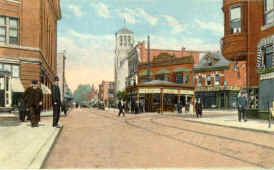
What better place than the "crossroads" of old Chester, the "Newsstand" at 7th & Edgmont, to designate as a gathering place for current as well as former Chesterites and others with an interest in the history of Chester, PA!
- Our "Community Bulletin Board" -
Share your recollections about Chester!
Post some current news about what's happening in the city!
If you're doing genealogy, post the surnames you're working on.

"The Newsstand", Edgmont & 7th St.

Home

What's

Attorneys

Biographies

Businesses

Cemeteries

Churches/Worship

Civic/Social

Class Reunions

Classified Ads

Directories

Doctors/Dentists

Fire Department

Funeral Homes

Government

Histories

Holidays/Events

Libraries

Links

Maps

Medical

Neighborhoods

Newspapers

Obituaries

Parks

Pictures

Police

Post Office

Professional Org

Radio/TV

Recreation

Schools

Sports

Tragedies

Transportation

Utilities

Veterans


Be sure to include your name and your email address so that others can get in touch with you!

>>> Sign Up Now! <<<
~ - ~ - ~ - ~ - ~
You will now need a
User ID & Password
in order to make a posting to the page.

There is no charge and we welcome everyone to post their Chester news and recollections here. However, it has become necessary to require user names and passwords in order to overcome commercial spam postings to the page.

While I have always respected your privilege to post anonymously, there are times that I do need to be able to get in touch with you. Therefore I must have your complete contact information.

Click Here to Register

Please click here for other important news about the web site.

When you return to this page, be sure to press "Reload" or "Refresh"
on your browser in order to see your additions.

(Look for your addition right below this form.)


ALAN FERGUSON
SRES, Realtor®

Chester High School - Class of '62

Media Office 
1055 E. Baltimore Pike
Media, PA 19063

Direct: 610-892-8300,
Ext. 8348
Fax: 610-892-8301

Email | Visit my website

10 Newest Entries:
[Go to newest posting]

Harvey Martin
11/16/2009 4:11:27 AM
Black Horse Tavern


Harvey Martin
11/15/2009 5:55:01 AM
Mickey


Harvey Martin
11/13/2009 10:19:49 PM
Essington Seaplane Base


Harvey Martin
11/13/2009 8:51:16 PM
Chester Lace Mill


Harvey Martin
11/12/2009 2:28:22 PM
Kolasinski Kiddies


Harvey Martin
11/11/2009 9:20:07 PM
New Shiloh Baptist Church


Harvey Martin
11/9/2009 9:55:36 AM
New Soccer Stadium


Harvey Martin
11/7/2009 8:57:27 PM
H. A. Hackett


Harvey Martin
11/4/2009 3:31:25 PM
Upland Normal Institute


Harvey Martin
11/2/2009 1:02:19 PM
Alix Combole & Orch


  Dell Business Weekly Promo   

Folks, this Dell ad has been here for several years but has never produced any income for the web site. It only pays if you click on it and make a purchase. Please keep this ad in mind if you're looking to buy a computer, printer, printer supplies or any of Dell's other great products! 

graduate.gif (1470 bytes)


Most recent postings:

Name: Harvey Martin

Residing: Parkside

Time: 11/16/2009 4:11:27 AM

Subject: Black Horse Tavern

Comments:

From the Chester Times of 8-12-1885
 
A TRAGEDY OF LONG AGO
 
Many years before the nineteenth century was ushered in, one James Pennell was landlord of Johnson's Tavern, a Chester hostelrie of considerable repute. As an attraction for the public, he kept a tiger, a large animal, but which was very docile and could perform a number of tricks taught by its master. No monstrous menageries traveled the country at that time, and hence this beast of the forest drew a great many people to the tavern, where Pennell could frequently be seen astonishing the rustics with the capers he could make the tiger execute.
 
It always obeyed his commands, and he had no fear that the animal would harm him. As the years went by, mine host of Johnson's Tavern became proprietor of the Black Horse Hotel, in Middletown township, now kept by E. C. Lyons, and thither the tiger was removed. The exhibitions were continued, and one day Pennell taxed the endurance and patience of the animal by making it perform repeatadly, and becoming enraged it sprang upon him with great fury. It tore his flesh with its teeth and claws, and before the wild beast could be secured Pennell was a dying man. He lingered a few hours and died. The tiger was then shot to prevent any more bloodshed.  
 

From the Chester Times of 11-25-1976
 
PET TIGER CLAWS INN OWNER TO DEATH
 
Of all the colonial taverns that flourished in Delaware County none had a more tragic event than the Black Horse Hotel.
 
James Pennell, one of many proprietors of the historic inn in Middletown, was clawed to death in 1794 by his pet tiger in full view of his patrons.
 
Pennell had been a tavernkeeper in Chester for many years and had become quite popular with his animal act.  There were no traveling animal shows in those days and the tiger performance attracted large crowds.
 
Pennell had owned the animal for several years and took great pleasure and pride in exhibiting his control over the beast. He could make the tiger perform many novel tricks.
 
He became the Black Horse Hotel proprietor in 1793 and continued his tiger act there.  On this particular day in 1794, while showing off the tiger to patrons, he taxed the beast beyond its patience. The great cat sprang upon him in anger and before he could be rescued the animal had torn him so violently that he died within a few hours.
 
The Black Horse Hotel, established in 1739 by William Noblitt, once stood on the northeast side of the cloverleaf carrying Middletown Road across Baltimore Pike. The location in colonial days was described as the juncture of the Baltimore Turnpike and the old Edgmont Road, known as "the great road leading from Chester."
 
Black Horse Hotel still leaves memories of its prominent place in early county affairs.  This photograph, showing a modern addition, includes the public pump that once stood outside the tavern.  It was built by William Noblit in 1739.  Noblit, in petitioning for a license to conduct a public house, used the needs of church goers to plead his case.  Said Noblit "...having newly built  a commodious stone house upon the great road leading from Chester to the Valley, about three-quarters of a mile from the Presbyterian (Middletown) meeting-house where commonly is a great resort of people, and as some ten or fifteen miles to travel to a place of worship, " it is necessary for the public.  How our times and moves have changed.  This tavern was the birthplace of Media for here the vital meeting that lead to the creation of the county seat took place over a hundred years ago.
Crowning the crest of one of the highest points in Delaware County, the Black Horse Hotel enjoyed great popularity in the days before Media became the county seat and transportation was largely by team and stagecoach. It was noted for the quality of its food and the comfort of its lodgings.
 
It was a popular stopping place for farmers from Coatesville, Lancaster and other points who brought their wagons to Chester in the spring to cart home hundreds of succulent shad packed in ice and straw, to be cured for winter use.
 
Public sales of cattle were held often at the inn. Every Feb. 22 there was a great rendezvous in which farmers vied to display the fattest beef and the finest pork.
 
The Black Horse consisted of some 300 acres, and the pastures often were filled with oxen, dairy cows and steers.
 
Chester was then the judicial seat and back-country folks often stayed at the Black Horse after settling legal entanglements.
 
Early fox hunts were held at the Black Horse in the years before the Rose Tree Hunt Club became famous. The hunter's horn, it is said, sounded the call there for some of the greatest fox hunts ever held in the county.
 
In wintertime, the merrymakers would come in sleighs for a supper and dance. The Black Horse probably had its greatest prominence as a political center. The great historic meeting "to take into consideration the propriety of removing the seat of justice to a more central position" was held there. This meeting resulted in the removal of the county government to Media.
 
In its heyday, the Black Horse was the favorite convention place of all political parties.
 
At one time, the tavern was the polling place for Middletown, Edgmont, Concord and Upper Providence townships.
 
Historians say politics eventually doomed the Black Horse, that "it fell into disuse as a political rendezvous, and gradually dwindled into desuetude."


Name: Harvey Martin

Residing: Parkside

Time: 11/15/2009 5:55:01 AM

Subject: Mickey

Comments:

By TOBY BATES
LENNOX PARK
 
Chester Times 6-26-1958
 
JUST because school is over for the summer doesn't mean that
Mickey, the big, brown dog who has been escorting children to
the William Penn Elementary School every morning for the
last three year's, won't have anything to do.

Mickey never has a dull moment, winter or summer, rain or
shine. He's either greeting bus drivers, chasing stray dogs or
helping newsdealers deliver their newspapers.

THE PART COLLIE dog is claimed by Mr. and Mrs. Harry
Louth, 3800 W. 12th St., Lennox Park, although many people
think Mickey doesn't have a home. Mrs. Louth has tried for
three years to keep a collar and license on Mickey but each time
she puts 'one on neighborhood children take it off. But, no matter
how homeless Mickey looks, he's got a big dog house and
a full plate of food awaiting his return every night at the Louth
home.

During the months school is in session, Mickey is a busy dog.
He greets the children going to school, escorts them across the
street and walks them to the door. After the bell for classes
rings and the children go to their rooms, Mickey runs off to tend
to his other business until the end of the school day when he's
back at-school.

SCHOOL CROSSING guard, Mrs. Mary Klock, 1437 Highland
ay., says Mickey is the,only dog that has never been a nuisance
to the guards in that area. "He's good to the children and never
gets rough with them except to playfully tug at their lunches or
their coats."

Another favorite friend of Mickey's is Ted 0ttey Jr.; 1123
Highland av., who is a newsdealer and delivers his papers
on a servi-cycle. Ted says that Mickey seldom misses a day of
helping him. Sometimes he plays racing games with Ted, taking
short cuts and meeting him at his next stop.

Although Mickey is well-known for chasing dogs and getting into
fights with them,, he has never bothered Ted's dog, Penny, a
cocker-spaniel, that rides in his servi-cyde. They just rub noses
and go their own ways.

MICKEY'S FANS have a story they love to tell about him. Two
years ago, at 13th and Pulaskie dr., a bus stopped at.the corner
and the driver opened the door and gave Mickey something to
eat. Ever since then Mickey meets all buses stopping at that
corner. When the driver opens the door, Mickey puts his two
front feet in the doorway and refuse's to move until he is given
something to eat. If the driver is unfortunate enough to have
forgotten a tidbit for Mickey, he has to remove the big dog bodily.

This clears up only a little bit of the mystery that shrouds
Mickey's life. No one yet knows where Mickey goes while the
children are in school or why he chases dogs but protects cats or
why he runs down the middle of the street instead of the side,
even when he's been hit by cars several times. But Mickey likes
his privacy—he's just not talking.


Name: Harvey Martin

Residing: Parkside

Time: 11/13/2009 10:19:49 PM

Subject: Essington Seaplane Base

Comments:

FLYING BOAT, 1915 MODEL—In the photo above, a 1915 flying boat has just landed on the Delaware River at Essington. A year later, the Philadelphia Seaplane Base was established at Essington, and has continued to operate through the years except for interruptions by two world wars. Flying was a real thrill in those early days, and many a daring pilot ended up with a ducking.
(From the Chester Times 9/7/1951)
 
The days when airplanes were anovelty are past. Daily, we see scores of regularly scheduled air liners pass over the city and county. But water-based planes are something with which the public is not so familiar. Yet here in Delaware County, just a few miles from the heart of Chester, is a seaplane base that has been operating for 35 years.
 
As a matter of fact, a number of intrepid fliers were taking off from the surface of the Delaware and making hazardous landings at Essington several years before that.
 
It was in 1916 that the Philadelphia Seaplane Base was established at Essington by George C. Thomas, Col. Robert Glendinnmg and a number of other wealthy Philadelphians.
 
Their first "flying machine" was a Curtis hydroplane, and they used a floating hangar moored in the Delaware to conduct their initial flight operations.
 
It must be recalled that the aircraft of that period were pretty flimsy affairs. Engines were small and often failed to work properly.  And there were no cockpits. The pilot or pilots sat out in the open at the very front of the plane, foot controls just a few feet above the pontoons, so that a landing invariably meant a dunking.
 
In case of a crash, there was virtually no protection for those in the plane.  The same was true, of course, of land-based planes of those early days.
 
The early operation at Essington was called the Philadelphia School of Aviation, and Frank Mills, a graduate of Curtlss School in San Diego, Cal., joined the group as flight Instructor. 
 
With the advent of World War I the army took over the. school and Mills was retained as senior instructor.  At the end of hostilities, Mills bought the school at auction and named it the Essington School of Aviation.
 
During the period between 1920 and 1938, hundreds of persons learned to fly at the Essington school.  Some of the students later became prominent in aviation circles such as the late Col. Hugh McCaffey of Chester.  PMC athletic hero who was killed in World War II and who flew many years for Uncle Sam, and Cmdr. John Mansure of Prospect Park.
 
Many of the graduates of the school liked flying so much that they bought their own aircraft and operated them from the base, bothe for business and pleasure.  Fillmore S. Cookman and Walter Palmer, both of Chester, are among them.
 
Cookman, a bus driver for Southern Pennsylvania Bus Co. has been flying since 1926.  He owns and operates his own Seabee amphibian, which he keeps at the Essington base.
 
In 1938, Mills and the late Alexander H. Bass decided to enlarge the operation and include instruction in all phases of aviation. Courses in aviation, engineering, navigation, aerology and mechanics were offered.
 
At this time, the name again was changed—this time to the Philadelphia Schoo of Aviation and Seaplane Base.  In 1940 both Mills and Bass died, severly curtailing operation of the school.  Mrs Mills continued to operate it with the aid of her sons until the outbreak of World War II.  Then defense zone requirements forced the base to close.  However, during the war, limited Civil Air Patrol operations wer conducted at the base.
 
Following the war Frank, Bob and Bill Mills resumed the operation and it is now known as the Philadelphia Seaplane Base.


Name: Harvey Martin

Residing: Parkside

Time: 11/13/2009 8:51:16 PM

Subject: Chester Lace Mill

Comments:

Lace Mill Girls
 
Photo Courtesy of Joan Shorter
 
CHESTER LACE MILLS ACTIVE
Chester Times 9/8/1936
 
 
History of Local Thriving Concern Dates Back to 1876
 
Twelve plants scattered throughout the Middle Atlantic Seaboard compose the lace curtain industry in the United States. One of these plants is situated in Chester and although one of the smallest in size in the industry it flourishes as one of the most active.

The seeds of the present day factory of the Chester Lace Mills were sown in the year 1876 when Simeon Cotton erected what was called the Centennial Mill at the corner of Second and Trainer streets for the manufacture of cotton yarn. In 1884 in the single, stone building that is standing and In use today, it is recorded that this mill produced 7,000 pounds of cotton warp a week from 16 bales of cotton.  For reasons that we do not know, however, production in the Centennial Mill was curtailed toward the close of the nineteenth century. In 1897 the idle property passed into the hands of the T. I. Birkin and Company which was entertaining plans to move south from Philadelphia.

T. I. Birkin & Co. with its American branch in Chester was an English corporation and one of the largest manufacturers of Nottingham machine-made lace curtains in the world. It operated factories at Nottingham, England; Glasgow Scotland; Oelsnitz, Saxony Warsaw,
Russia, and had offices in New York, Chicago, San Francisco, London, Paris, Berlin, Toronto and Melbourne.  Machinery of the concern was set in motion in Chester in 1898.

Ten years later, in 1908, the present owners of the piant secured control through purchase, and in the year following that, the Chester Lace Mills were incorporated as such. At that time 17 Nottingham lace machines were in operation.  Their number has since been increased until today the number of machines totals 22.

A striking characteristic or the Nottingham machine-made lace curtain is that despite the rise and fall of fashion and change throughout the years, the original machinery of the industry has been in continual use. In almost every other industry has there been at one time or another the necessity or scrapping machinery for something more modern or more efficient.  A versatile quality of the Nottingham machine, however, permits inflnite variety in pattern, style, and fashion trend on looms which, in the case of the Chester Mills, have been in continuous service since the year 1813—machines making curtains as perfect and quite as economically as the very newest models.

In 1927, the Chester Lace Mills, under the presidency of Charles A Turner, realized that though the machines of the plant could not be replaced to advantage, the old mill could be.  And so in that year work was undertaken to build an entirely new mill around the old without interfering with production.  As Mr. Turner said at the time, it was like instructing your tailor to build a new suit around your old one, changing a sleeve while you answered your correspondence and fitting the collar while you checked daily production .  Never the less the transformation was successfully completed, and, in the following year, 1928, production spurted ahead in the modernized structure that stands today as a climax to the 60th anniversary of the founding of the first mill on the site.

The Chester Lace Mills is a typical example of normal and healthy industrial growth and production—though on a small scale in accordance with the exigencies of increased consumer demand. 
 
In 1919, the Third Industrial Directory of Pennsylvania, published by the Department and Industry of that state listed 84 persons in the employ of the Chester Lace Mills. Today the number of employes approximates 250. There is, on the whole, all positive evidence that lace curtains have not been confined solely to the parlors of our  Victorian grandmothers. They are, on the contrary. a definitely recognized fact in the scheme of modern home decoration. And judging from the present trend of things, they will continue to play a large part in the artistic decoration of windows of the home of the future.


Name: Harvey Martin

Residing: Parkside

Time: 11/12/2009 2:28:22 PM

Subject: Kolasinski Kiddies

Comments:

14 Photos from Kolasinski Studio


Name: Harvey Martin

Residing: Parkside

Time: 11/11/2009 9:20:07 PM

Subject: New Shiloh Baptist Church

Comments:


Name: Harvey Martin

Residing: Parkside

Time: 11/9/2009 9:55:36 AM

Subject: New Soccer Stadium

Comments:

New Soccer Stadium
Thanks to Caroline!
Stadium and incomplete ramp to i95


Name: Harvey Martin

Residing: Parkside

Time: 11/7/2009 8:57:27 PM

Subject: H. A. Hackett

Comments:

710 Welsh Street


Name: Harvey Martin

Residing: Parkside

Time: 11/4/2009 3:31:25 PM

Subject: Upland Normal Institute

Comments:

From 1859 to the beginning of the Civil War, this was known as Upland Normal Institute. The enlistment of students disrupted classes, and during the war the empty building was converted into a Union Hospital. After the Gettysburg battle, wounded confederate soldiers were interned there. It later became Crozer Theological Seminary ~Martin Luther King Jr. attended there in the late 1940's.


Name: Harvey Martin

Residing: Parkside

Time: 11/2/2009 1:02:19 PM

Subject: Alix Combole & Orch

Comments:

Alix Combelle And His Swing Band Nerves And Fever  (1940) 
Alix Combelle And His Swing Band I Can't Give You Anything But Love  (1937) 
Alix Combelle And His Swing Band   Joyeuse Fumee (holy Smoke)  (1940) 
Alix Combelle Et Son Orchestre   Exactly Like You  (1937) 
Alix Combelle Et Son Orchestre   Crazy Rhythm  (1935) 
Alix Combelle Accompagné Par Ray Stokes (piano) Et Pierre Fouad (batterie)  Alix Combelle Don't Get Tired  (n) 
Alix Combelle Et Son Orchestre   The Sheik Of Araby  (1935) 


Name: Harvey Martin

Residing: Parkside

Time: 11/2/2009 6:22:49 AM

Subject: Chester Schools Needed

Comments:

6-17-49
PUPILS, PUPILS EVERYWHERE—Chester High School, shown here from the 8th and Fulton sts. side, is housing some 2000 students in grades nine to 12, overtaxing the building facilities. The government consulting service survey advises that early in the 25-year program the high school should drop the ninth grade and have only three high school grades.


Name: Harvey Martin

Residing: Parkside

Time: 10/31/2009 1:54:30 PM

Subject: Lazaretto - It Guarded Our Shores

Comments:


Lazaretto: It Guarded Our Shores
By ARDEN SKIDMORE
Dally Times Staff Writer
 

TINICUM - 5-15-1965

It's believed to have been America's first quarantine station. It protected hundreds of lives in the 138 years it operated at two sites along the Delaware River. Through acquisition of one site in the early 1740s, the state for the first time became owners of Negro slaves.

World War I pilots were trained there at a pioneer seaplane base. Their senior flight instructor was Col. William C. Ocker called the nation's "father of blind flying."

SUCH IS the record of the Lazaretto Quarantine Station, established in 1742 by the Province of Pennsylvania to protect Philadelphia from contagious diseases carried aboard inbound ships.

The first Lazaretto Quarantine Station was near historic Fort Mifflin in Philadelphia. It was also known as The Marine Hospital of the Port of Philadelphia. It was moved to Essington in 1800 when a yellow fever scourge alarmed Philadelphians. Ownership was transferred from the state to the City of Philadelphia.

The station remained there for 80 years. In the late 1800s the quarantine operations were taken over by the federal government and are now conducted by the U.S. Public Health Service with offices at Delaware Ave. and Market St. Marcus Hook.

OF THE ONCE – sprawling quarantine complex here, all that remains is the main building, one block house, the old physicians' building — now a clubhouse for the Riverside Yacht Club —and two small brick buildings. They are at the foot of Wanamaker Avenue, between 2nd Street and the Delaware River.


The main building — The Lazaretto — is a handsome three story brick structure of traditional Georgian design. It serves as the headquarters of the 50-year-old Philadelphia Seaplane Base and as a home for the base's operators and the property's owners.

They are C. Robert and J. William Mills, who with their families live in separate two-story wings of the 28-room building. A third brother, Frank Mills of New Jersey has an apartment in the building.

THE MILLS' father, the late Frank Mills, a pioneer civilian flyer, purchased the 11.32 acre property in 1937 from Philadelphia for $10,500, through a newspaper advertisement.

Not long after the purchase, approximately one acre and the old physicians' residence was sold to the Riverside Yacht Club which remodeled it into a clubhouse. The main building's appearance hasn't changed much from the day it was built. A porch runs the full length of the building's front. Several dormer windows dot the roofline. Some of the building's original 28 fireplaces—one for each room—have been, blocked up, however.

ALTHOUGH the Mills have spent large sums of money for upkeep, visitors often are critical of what they say is neglect of the historic landmark. Robert Mills replies: "It may not be used to the best of its potential, but it's our life.

"Everybody with common sense said we should have torn it down. My father spent every cent he had fixing it up." Despite the obscurity into which it has fallen, Robert Mills said many people still telephone to inquire about The Lazaretto. The property has been mentioned as a possible state Project 70 recreation area. Robert Mills doesn't like the idea.

"I'm for preserving open space. I voted for Project 73, but this is our livelihood." He also contends th« proposed route of the Delaware Expressway (Interstate 95) and the proposed new jet runway for Philadelphia International Airport are threatening not only the Lazaretto but the entire Tinicum harbor.

NO HISTORICAL marker is on the property to indicate its rich past. The area west of the Lazaretto property is where once stood Fort Gotlenburg, Printz Hall, the church, graveyard and other buildings in the Swedish settlement of Prinlzdorf, founded in 1643 by Gov. John Printz but it was early German inhabitants who were instrumental in getting the quarantine station established.

Early in 1742, they presented a petition to Gov. George Thomas complaining that "for want of a convenient house for the reception of such of their country-men as on their arrival here labored under diseases contracted in a long voyage, they were obliged to continue on board the ships which brought them, where they could get neither attendance or conveniences suitable to their condition, from whence many have lost their lives."

The governor immediately recommended the erection of a building at public expense "not only to accommodate such as shall arrive hereafter under the same circumstances, but to prevent the future importation of diseases into this city, which has more than once felt the bad effects of them."

FISHER'S ISLAND, containing 342 acres, some buildings and several Negro slaves, was purchased by the state for $1,700. Historians say this probably was the first occasion in which the state became owner of slaves. Six acres of land nearest the river were used for the quarantine station. In 1750 a number of new buildings were built.

In 1775, Dr. Benjamin Rush—destined to become one of the great figures in the growth of U.S. medicine — was instrumental in getting sick or wounded crewmen of Pennsylvania's armed boats furnished with provisions, drink and wash at the Lazaretto.  In 1777, a steward was appointed to the quarantine station on an allowance of $26 per month.  By 1794 there was a mounting interest in public health.

WITH GOV. THOMAS Mifflin taking an active role, a general health law was passed which led to an expanded quarantine station staff. A health officer, a consulting physician, and a resident physician ail saw duty at the Lazaretto.

"The Board of Health" created by an act of the General Assembly had the power to levy a hospital tax and even borrow money and other needful things. On Aug. 7, 1799, the board of health of Philadelphia purchased the Essington site for $2,000 from Morris and Reuben Smith.  Robert Mills has a copy of the 1799 transaction. On Nov. 21, 1799, the U.S. government bought from John and Mary Taylor the adjoining six acre property to the west of the Lazaretto and used it as a wharf and warehouse. It is now owned by John Bosacco and is called the Governor Printz Marina.

BOTH THE SMITH and Taylor land titles came down through Swedish grants, according to Guy C. Bell, a title company official. "It is interesting to note that the Taylors, who made the conveyance in 1799, and their predecessors. . . had been in title since Feb. 2, 1683, when Christopher Taylor bought from De LaGrange, who had acquired the title to Tinicum Island through Governor Printz's heirs." Once the land had been acquired in 1799, buildings were quickly erected at Essington. Quarantine operations were established early in 1801.

A BREACH OF quarantine caused some excitement in 1804. John Ferguson, skipper of the schooner "Monongahela Farmer," had permitted 32 people to go ashore while undergoing quarantine but efforts to indict failed.

There were angry words again in 1824.  A man dangerously ill with smallpox landed from an oyster boat in Chester where citizens sent him to Lazaretto in a market wagon. While waiting to be admitted, the man asked for a drink of water, then fell dead in the market wagon.  Philadelphia newspapers bitterly attacked Chester for the act.

A MAJOR TRAGEDY struck in 1870. A ship loaded with logwood arrived from Black River, Jamaica. Its captain had died and was buried at sea. While undergoing fumigation, canal boats were sent from Philadelphia to remove the logwood. An unidentified woman and baby on one of these canal boats sickened and died. It was pronounced yellow fever. Filthy rags were taken ashore and burned.

On Friday July 1, 1870, Ann Eliza Enos and Ann Sharp were stricken at a Tinicum hotel operated by Jacob Pepper. They died within a week. Pepper also died. By August 13 the scourge had killed 10 people, including Dr. William S. Thompson, The Lazaretto physician; Robert Gartside, the quarantine master, and Mrs. Mary Gartsell, a quarantine nurse for 15 years.

A great cry went up to have the quarantine station moved to I Little Tinicum Island in the middle of the Delaware River. A petition with the signatures of 1,000 Delaware County residents was presented to the state legislature in 1871 seeking action.

Gov. John White Geary even paid a personal visit to the station. But the so-called removalists were beaten at every turn in the legislature.  Their strong stand, however, is said to have been a factor in the station's shift farther downthe river—to Marcus Hook —within a decade.

MANY OF its doctors and surgeons were notable names in early Delaware County medicine The daughter of Dr. Jesse W. Griffiths, one of The Lazaretto physicians, married the Rev. Mark R. Watkinson, whose plea led to the motto "In God We Trust" being placed on U.S. Coins.

The road which led to The Lazaretto from Mr. Watkinson's church in Prospect Park was called The Lazaretto Road. It is now Lincoln Avenue. A painting of the Lazaretto hangs in the neighborhood room of the Atwater Kent Museum at 15 S. 7th St., Philadelphia.

BY THE TURN of the 20th Century and the removal of the quarantine station, the Tinicum harbor had become a teeming pleasure resort area. The Philadelphia Athletic Club was at The Lazaretto, called "The Orchard." The Philadelphia and the Corinthian Yacht Clubs were eslablished.

The Philadelphia Yacht Club

The Corinthian Yacht Club

THE AVIATION PHASE of Lazaretto was a colorful one About 1913, the site became a civilian flying school catering mostly to rich men's sons. Called the Essinglon School of Flying, it was operated by Col. Robert C. Glendinning and George C. Thomas on a lease arrangement with the City of Philadelphia. The two men had about six planes. The late Joseph N. Pew Jr., son of the founder of Sun Oil Co., learned to fly there.

By authorization of Congress in 1916, the Essington Seaplane Base became one of two squadrons designated to protect the eastern U.S. from the growing war threat. The Lazaretto was the main barracks and the base was known as Chambers Field. It was operated by the Army Signal Corps.

When war came the Essington group became the 45th and 143rd Aero Squadrons. The men trained at Essington then were transferred to Gerstner Field near Lake Charles, La.

 COL. WILLIAM C. OCKER, called the
the father of blind flying," was honored
by World War I seaplane pilots he
trained at Essington.
Memorial (below) is in the U. S. Air
Force Academy, Colorado Springs, Colo.
 
THE SENIOR flight instructor was Col. William C. Ocker, a famous pioneer military pilot who was credited with the development of many of the advances in instrument flying.  Calling him an "early exponent of the theory, concept and applicability of Wind flight," the Air Force said Col. Ocker "personally pioneered the design and formative development of a preflight reflex trainer, which ultimately became on indispensable factor in the pilot trainingprogram." Col. Ocker died in 1942 at 66.
 
 
 A man who remembers Col. Ocker is Charles Showell, 75 a handyman at the Corinthian Yacht Club for many years Showell was the private attendant to Col. Lewis E. Goodier Jr., commanding officer at the Essington base.

IN 1936, the Philadelphia Society for the Preservation of Landmarks learned Philadelphia was considering selling the Lazaretto. The society made a strong bid to preserve the site as a home for sick children. The late Col. James A. G. Campbell of Chester joined in the effort as president of the Delaware County Historical Society Campbell, who had often visited the Lazaretto when it was in operation, made a plea to the Delaware County commissioners to waive taxes on the property but efforts failed and in 1937 Mills bought the property.


Name: Harvey Martin

Residing: Parkside

Time: 10/28/2009 4:37:55 AM

Subject: John Francis DeSwan

Comments:

JOHN FRANCIS DESWAN, 73-year-old Congressional Medal of Honor
winner, is pictured above wearing his medal while his granddaughter,
 Norma Jones, age 11, holds his Silver Star. The cavalry veteran now
lives in Green Ridge.
 
This Veteran of Four Wars
Holds Nation's Top Honors
By HARRY MAITLAND
2/1/1949
 
"Old soldiers never die ..."
The old soldier in this case Is 73-year-old John Francis DeSwan presently of 20 Neeld lane, Green Ridge, holder of both the highly prized Congressional Medal of Honor and the Silver Star, he is easily one of the most colorful heroes ever to live in Delaware County.
 
He lived through history in the making. Combat fighting in the Spanish-American War; the Philippine Insurrection, and the Mexican Campaign plus service during World War I heads some of his varied activities.

The white-haired, veteran cavalryman had just risen from a noon nap when Interviewed and sheepishly viewed the reporters proposal. After waking fully, the aged warrior unraveled a story that would enchant many. His experiences, backed by war department documents, cover a glorious period in American history. 

Born, January 13, 1876, in West Philadelphia, DeSwan became a star baseball player and crack member of the cadet corps while attending Girard College.  For a short time after graduation, he worked in the employ of a tobacco expert-import firm.  A yen for more baseball and the adventures of the open road beckoned and he was unable to resist. The 17-year-old youngster was guaranteed plenty of basebaIl by the Army recruiting officer.
 
As a sergeant five years later, DeSwan received the nation's highest military award for exemplary action during the battle for El Poso Hill, outside of Santiago. His citation from Secretary of War, Dwight Davis, by order of President William McKinley. reads, "For distinguished bravery in the battle of Santiago, Cuba, July 1, 1898 in rescuing two wounded men from in front of the lines while under heavy fire of the enemy."
 
The complete action was far more touching than is told by the few terse words of the War Department release. It was a story of sheer human courage.

Moving ashore as a member of the 21st infantry regiment, in one of the first waves to hit San Juan Hill, DeSwan witnessed one of the bloodiest battles recorded in the history annals.  San Juan was taken and the American units moved on to capture the next objective—El Poso. The entire engagement lasted nearly 13 days with three days of "really bitter fighting" according to DeSwan.

"We of the 21st, combined with the 2nd inf. regt. to continue the advance on well-fortified El Poso.  Our units moved forward and just crept over the crest of the hill when a fierce counter-attack let loose. The barrage caused us to retreat for shelter back down the hill.  After reaching cover. I noticed that two of our boys were missing.  "Joe May from Canada, and Tommie Tomkins, an English boy, we knew were not able to make it back over the hill top.

Three volunteers and I left to recover the men. Tompkins died before we could get him back and May died of his wounds shortly after being returned to our lines.  A few days later the siege of Santiago was completed and the Spaniards surrendered. Soon after, I took sick with typhoid and malaria."

He was returned to his home on sick furlough and gradually regained his health against high odds. Months later he was back at active duty and within a year was on the other side of the world when Federal troops were used to quell the uprising factions in the Philippine Insurrection. It was a two-fold battle. Some jungle fighting was against native guerrilla forces while major battles were waged with heavily-armed units toward the end of hostilities.  The 21st infantry took part in the Cavite, Morong. Paete, Tayabas, Coloma and Lake Taal campaigns.
 
During peacetime in the Philippines DeSwan was able to get around to his promised baseball and was able to transfer back into a cavalry group: He became a member of the 13th cavalry regiment and remained with it until his retirement. DeSwan played first base and shortstop for the "old 13th" in the Manila League. The team copped the pennant one year and never finished lower than second place. "Most trouble came from those Marines," related DeSwan, "They were redhot ball players."

Baseball formed a major portion of the entertainment of the troops and was handled on a large scale. The parks equalled any in the States during that era. Large attendances were registered and half the gate receipts were split among the players and half went to the regiment funds. Many big-league stars of the times visited the islands and held exhibition games with the service stars.

A tour of duty within the U. S. enabled DeSwan to receive the Silver Star. The southwest section 01 the country was terrorized by the plundering of a band of Mexicans under the famed desperado, Pancho Villa.  News reached the post at Columbus, N. Mex., that Villa was heading their way. The post was under siege and the officers' dependents were in a dangerous position of being captured. DeSwan was able to save the dependent group from the throes of the ralders through his quick-wit and removed them from the danger area. The action occurred March 9, 1916 and warranted the Silver Star from the war department.

In the period of service, DeSwan twice was commissioned on officer, once with temporary status and finally as a first lieutenant with permanent status. He received this promotion and commission during World War I while serving as a technical instructor for cavalry combat. When eligible for retiremcnt he finished his final "hitch" and was discharged as an officer. The next day he reenlisted once more in his old outfit, "the 13th," and applied for retirement as a first sergeant. The pension rate, as top sergeant, was far higher than that of a first lieutenant.

The final mustering-out services were held for the old soldier in July, 1920, at Ft. Clark, Tex. A special notation by Maj. Gen. P. V. Coleman was added to his orders for discharge. It read: "Ist/-sgt. DeSwan takes with him in his retirement the best wishes of all officers and men of the 13th Cavalry with which he served so faithfully and long." Gen. Coleman later became head of the Old Soldiers' Home in Washington, D. C.  "That's where I'd be now if it wasn't for my family," DeSwan opinioned.

It is very unique in that DeSwan can tell of his exploits.  The majority of Congressional Medals of Honor were awarded posthumously.  Up until July 1, 1948, only 2116 have ever been presented.  Thirty were awarded during the War with Spain. A total of 292 were awarded during World War II.

The urge for saddles, reins and stirrups bested him and prompted him to  accept a position as instructor of horsemanship at Pennsylvania Military College during the school year 1920-21. He became a close friend of Charles E. Hyatt, then president of PMC and father of the present school head Col. Frank K. Hyatt.
 
During World War II. DeSwan worked at Cramp's Shipyard in the inventory section as his contribution to the war effort.

Residing now with his daughter and son-in-law, Mr. and Mrs. Elmer Jones, he busies himself with the daily activities of the small community. Another daughter, Mrs. Nina Edwards, lives in Philadelphia.

Recently he joined the Green Ridge American Legion Post and is a real favorite with all members as "a soldier's soldier."  In fair weather, the elderly gentleman wheels his granddaughter, Nina, age two, around the village in order to pass time and gain exercise.

DeSwan is thankful that he was ne\ver wounded in any skirmishes and is proud of the fact, "that less than a hundred people have ever seen my medals during all the time I have had them."


Name: Harvey Martin

Residing: Parkside

Time: 10/27/2009 6:18:04 AM

Subject: Prospect Park - 1950

Comments:

SHOWN AFTER ATTENDING THEIR BACCALAUREATE are the
members of the Class of 1950, Prospect Park High School.
 
In the front row, reading from left to right, are: Dorothy Stahosky,
Dorothy Field, Elizabeth Griffith, Anna Burnett, Marent-Graddock,
Marie Dougherty, Roberta Miles, Edith Bradford and Viola Hewitt.
 
Second row Eleanor Meckley, Muriel Richmond, Norma Trump, Lorene
King, Edith Bradfield, Barbara Adams. Lillian Barder, Norma Burnham.

Third row—William Palmer, Robert Calder, Raymond Sheppard,
Robert Jackson, Harris Meisel, Richard Worley, Mary Bryant.
 
Fourth row—William Herbert, William Walls, Palmer Hoffman, Mason
Ashby Fred Coffman, Robert Tapper and Charles Stith.
 
Back row—William Wilson, Jack Fleenor, George Franklin, Robert
Hagerty, Richard Nelson, Robert Janick and Robert Waddell.
 
Also graduating but not in the picture are William Burton, Leonard
Edge, Stanford Nagle, Donald Riggins, William Shannon, Donald
Wright, Donald Hetzner, Joan Biester, Nancy Naef, Margaret Rhodes,
Geraldine Woznicki and Joan Fisher.


Name: Harvey Martin

Residing: Parkside

Time: 10/26/2009 6:00:35 PM

Subject: Moya Miniatures 6-14-1948

Comments:

6-14-1948 MOYA MINIATURES—Six miniature firemen—sons of Moya members, led off the parade. The boys are pictured above with a model steamer, drawn by ponies. On the seat with the driver is four-year-old Walter Garrett. Standing along side, left to right, are: Walter Sammons, nine; William Owens, Jr., seven; John Dooley, Jr., 12. Standing in the rear are Jackie Berry, nine, at left; and Ralph Worrilow,
eight, at right.


Name: Harvey Martin

Residing: Parkside

Time: 10/26/2009 4:53:37 PM

Subject: Turkey Day 1950

Comments:

START OF A VAST MEAL—November 1950 - Jack W. Coopersmith is shown launching several hundred orphaned and needy kids on a great Thanksgiving feast. The president of the Great Leopard Super Markets is shown getting his knife in one of the 75 birds—about 2000 pounds of turkey—which disappeared with the youngsters as they are gathered around the board at the Great Leopard Market.


Name: Harvey Martin

Residing: Parkside

Time: 10/26/2009 7:34:17 AM

Subject: H. H. Ward - 1955

Comments:

H. H. WARD CO - 1955
4th & Engle Sts.
Chester, Pa.
Sheet Metal and Plate
Fabricators
Complete Machine Shop
and Welding Facilities
Phone Chester 3-7236


Name: Harvey Martin

Residing: Parkside

Time: 10/25/2009 8:18:48 PM

Subject: May Market 1947

Comments:

5-24-1947
MAY MARKET IS SUCCESS—Thousands attended the twenty-fifth annual May Market sponsored
by the Chester Hospital oh Friday. The weather, was warm, the sun was
bright, and children of all ages had an enjoyable time.. The photo at top left shows
Mrs. Charles Rankin, a recent bride from England, holding the multi-colored balloons
while Mary Ellen English and Bobby Springer look over the assortment. At top right,
the pony cart provides the younger set with a little fun. Left to right in the cart are
Maria Shippani, Nancy Stewart, Janice Mantz, Richard Thornton, Susan Morton, and
Patricia Ann Bailey. At the bottom, left photo, a small girl watches the small merry-go-round as her playmate rides and she holds her balloon. At the bottom right, one of the most visited booths during tha day was the lemon stick booth. Here Elinor Irving is shown presenting a lemon stick to Frances Brown, age 4, while her sister, Ann, age 5, looks on.


Name: Dave Andrews

Residing:  

Time: 10/25/2009 1:44:25 AM

Subject: Reunion

Comments:

Pat, Thanks for the info on the OCP Reunion. We had other plans for the day,so we could not go and the weather was horrible.I know some people who had been to every reunion that John ran and did not know of this until I told them two days ago.I learned of it on WHAT'S NEW page on OCP.


Name: Pat shropshire bennett

Residing: Claymont DE

Time: 10/24/2009 7:47:25 PM

Subject: OCR

Comments:

Went to the Old Chester Reunion today -very nice considering it was put together within two months. They were invited back for next year - we were there around 2 - not many people there but the ones who were enjoyed it. Hopefully, as the afternoon went on they had a big turnout - it poured rain so that probably kept a lot of people at home. The vintage car show was cancelled I'm assuming because of the weather - enjoyed it - hopefully, next year there will be more exhibitors.


Name: Dave Andrews

Residing:  

Time: 10/24/2009 7:05:15 PM

Subject: OCP

Comments:

Did any one attend the OCP reunion today?


Name: Dave Andrews

Residing:  

Time: 10/24/2009 7:00:32 PM

Subject: OCP

Comments:


Name: Pat shropshire bennett

Residing: Claymont, de

Time: 10/23/2009 9:18:46 PM

Subject: CHS 68

Comments:

You're right Mary Lou - that was awful when the high school burned down - split up our class but I remember going to the basketball game at the voc that night where we all chanted "the school is gone but the soul lives on" - I don't remember hearing if they ever found out who or what started that fire.


Name: Harvey Martin

Residing: Parkside

Time: 10/22/2009 8:04:48 PM

Subject: Village Green Hotel

Comments:

Village Green Hotel
William H. Twaddell
Notice the sign on the front of the balcony.
 
 3-20-1916
Mr. nnd Mrs. William H. Twaddell, Sr., celebrated the flftieth anniversary of their marriage at their pretty home in Central Bethel on the afternoon of the thirteenth. Guests were present from many points in both this State and Delaware. The decorations were gold and white. The dining-room was especially attractive, where everyone present enjoyed a delicious menu. A large and prettily decorated wedding cake occupied the center of the dining table. Everyone present had a very pleasant time, and showered the bride and groom of 50 years ago with best wishes and congratulations.
 
Mr. and. Mrs. Twaddell were the recipients of many pretty and expensive gifts, but the most substantial was $86 in gold.  They have three daughters and four sons and 24 grandchildren.


Name: Mary Lou Jones prendergast

Residing: Lancaster,Pa 17603

Time: 10/21/2009 5:01:30 PM

Subject: chs

Comments:

I'm amember of the class of 68. Often wonder if they ever found out who started the fire. Still to this day remember how sad it was to see the school burning.


[1/128]


Chester Rural Cemetery Association, Upland Ave., Chester, PA

Cullis Memorials, Brookhaven, PA

Media Cemetery Company, Media, PA

Minshall-Shropshire-Bleyler Funeral Home, Ltd., Media, PA
Minshall-Shropshire-Bleyler
Funeral Home, Ltd.
Media, PA

Alfonso Sanbe Construction Co., Chester, PA 610-872-4455

Fall 2005 Reunion
Slide Show

OldChesterPa
Classified Ads

For Sale

VINTAGE RECORDS
Over 200 records from the 1940's to 1970's. 33 1/3 ; 45; 
78 . Classical, Gospel, Christmas, Pop, Walt Disney, original Broadway sound 
Tracts Prefer to sell in lots, reasonable, customer must be local and pick up records. For appointment contact Martha, 610-876-6764 or e-mail here.
BOY SCOUT MEMORABILIA
1950-1970's. Many patches from the Valley Forge Council, National Jamborees, Camp Delmont. Call 610-876-6764
or Email here

Wanted to Buy

Looking for People

Robert Vaughan, former music director in the Chester-Upland School District is presently compiling information regarding students who continued in the field of music.
Please email him here or send a short resume of your career to: 821 Lakeport Blvd., Leesburg, FL 34748.
Place your ad Rates: $10 one month, $25 per quarter, or $100 for a full year.


  Dell Business Weekly Promo
Folks, this Dell ad has been here for several years but has never produced any income for the web site. It only pays if you click on it and make a purchase. Please keep this ad in mind if you're looking to buy a computer, printer, printer supplies or any of Dell's other great products!  


Have you enjoyed some pleasant trips down memory lane here?

• Have you gotten back in touch with former friends, classmates... even relatives?

• Has the website helped with your genealogy searches?

If your answer is "YES", please consider making a small contribution to the "OldChesterPa Heritage Foundation". If each person made even just a $10 or $20 donation, we could soon be assured that this rich resource of Chester's history would remain available for future generations.


Have you visited the
OldChesterPa.com Emporium lately?

Historic Chester Calendars

Chester History Books

Mugs

~ Also ~

T-Shirts


Would you like to read some of the earlier entries in the Guest Book?

January 2003
February 2003
March 2003
April 2003
May 2003
June 2003
July 2003
August 2003
September 2003
October 2003
November 2003
December 2003

January 2002
February 1-20, 2002
February 21-28, 2002
March 1-15, 2002
March 16-31, 2002
April 1-15, 2002
April 16-30, 2002
May 1-15, 2002
May 16-31, 2002
June 1-15, 2002
June 16-30, 2002
July 1-15, 2002
July 16-31, 2002
August 2002
September 2002
October 2002
November 2002
December 2002

Archives from the year 2000

January - March 2001
April - June 2001
July - August 2001
September 2001
October 2001
November 2001
December 2001


© 2000-2009 John A. Bullock III.

GDPub2.JPG (7902 bytes)

This page last updated 05/19/09

Home  |  What's new2.gif (111 bytes)  |  Attorneys  |  Biographies  |  Business  |  Cemeteries  |  Churches & Synagogues  |  City Directory 1859-1860

Civic/Social Organizations  |  Class Reunions  |  Doctors/Dentists  |  Fire Department  |  Funeral Homes  |  Government  |  Histories

 Holidays & Special Events  |  Libraries  |  Links  |  Maps  |  Medical  |  Neighborhoods  |  Newspapers  |  Obituaries  |  Parks  |  Pictures  |  Police Department

Post Office  |  Professional Organizations  |  Radio & TV  |  Recreation  |  Schools  |  Sports  |  Tragedies  |  Transportation  |  Utilities  |  Veteran